Development of the Environmental Health Sciences Program
By 1941, candidates for the DeLamar Institute’s MS degree were required to be graduates of “approved” medical, dental, or engineering schools or BA/BS holders with coursework in chemistry, physics, bacteriology, and math combined with previous public health work experience. Notably, the Institute introduced the Doctor of Public Health degree (DPH) that same academic year. Candidates needed an MD with one year’s internship at an approved hospital, in addition to an MS in public health and full-time “satisfactory experience” in public health work.
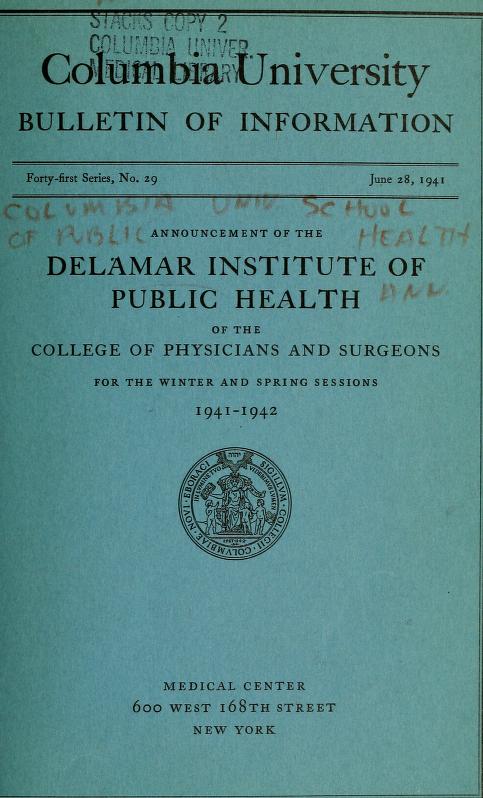
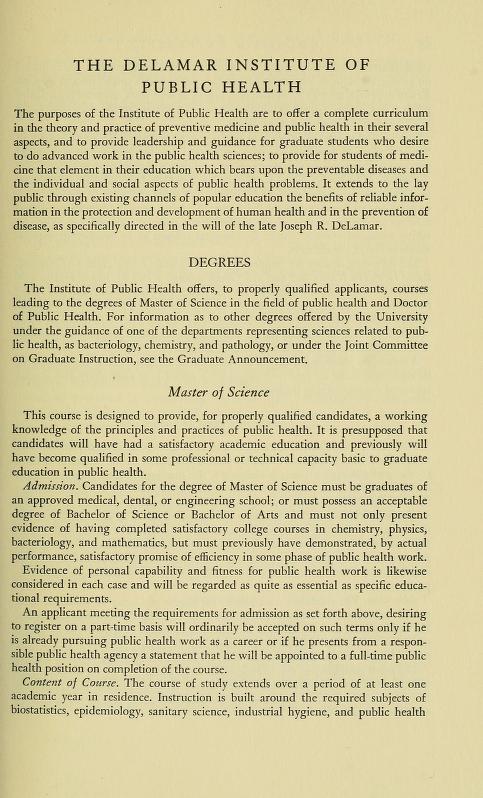
1941/42 DeLamar Institute of Public Health degree requirements
Columbia University bulletin of information : the DeLamar Institute of Public Health : announcement
New York : The University, 1941
M-Coll Serial C
By 1945, the Institute officially became the School of Public Health (renamed Joseph L. Mailman School of Public Health in 1988). MS candidates were to have achieved professional status in a related field or be graduate nurses. Those with BA/BS degrees and satisfactory coursework, in addition to at least five years of experience in public health work, were “occasionally” admitted into the MS program. In 1946/47, the School of Public Health offered the Master of Public Health degree (MPH) with the same admission requirements as that of the MS degree.
The 1953/54 School of Public Health and Administrative Medicine catalogue shows five fields of study:
- Hospital Administration
- Prepayment medical care
- Public Health Administration
- Industrial Medical Administration
- Medical School Administration
In a reverse trend, environmental control coursework terms changed to “sanitary science.” During this time, the focus of the program shifted towards hospital administration and the School was renamed School of Public Health and Administrative Medicine in 1955/56.
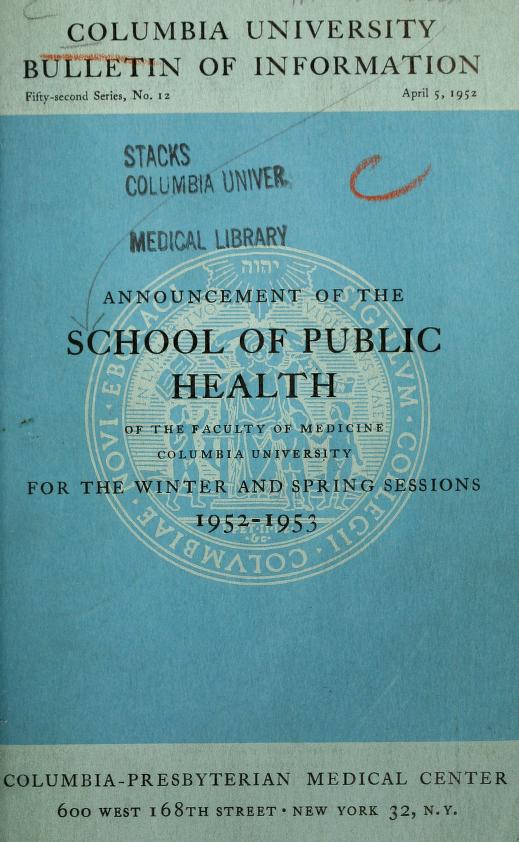
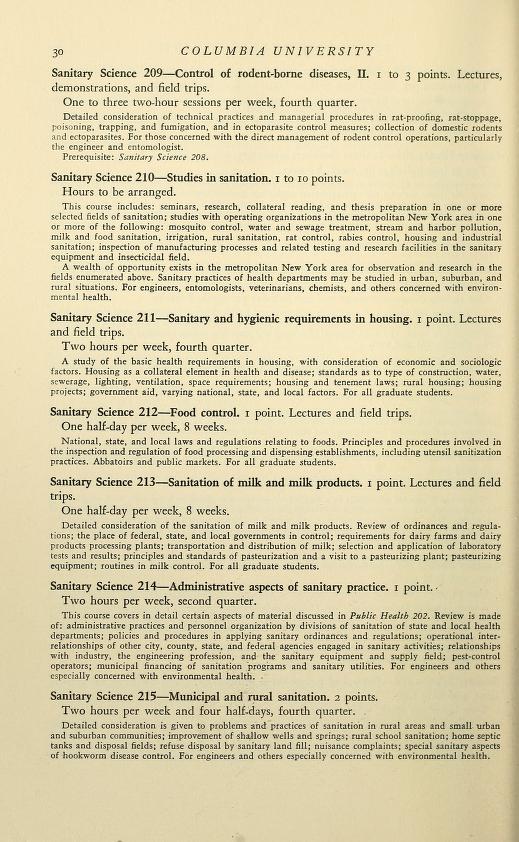
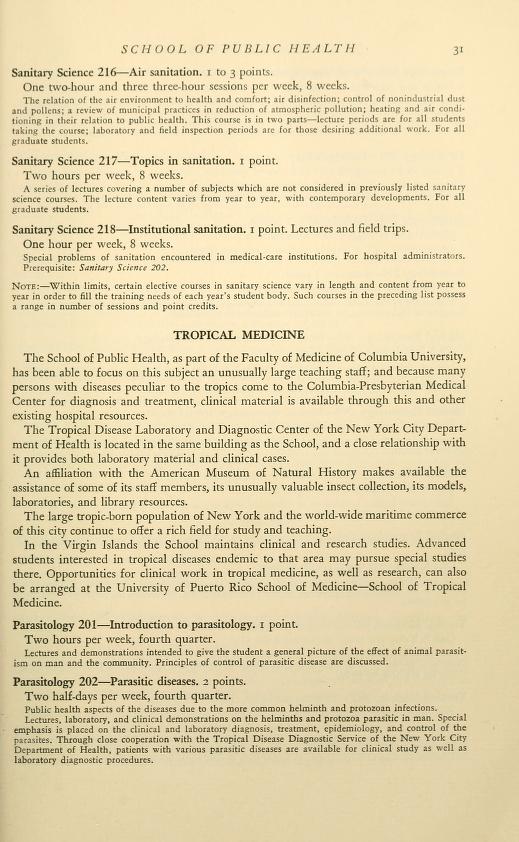
1952/53 Sanitary Science course descriptions
Columbia University bulletin of information: School of Public Health: announcement
New York : The University, 1952
M-Coll Serial C
Following the development of the atomic bomb, the field of public health increasingly addressed the health dangers of radiation exposure. Herman E. Hilleboe, professor of health practice in the Columbia University School of Public Health and Administrative Medicine (1963-1970) and former New York State Commissioner of Health (1946-1963), lectured on this topic, along with pollution and other environmental factors affecting public health.
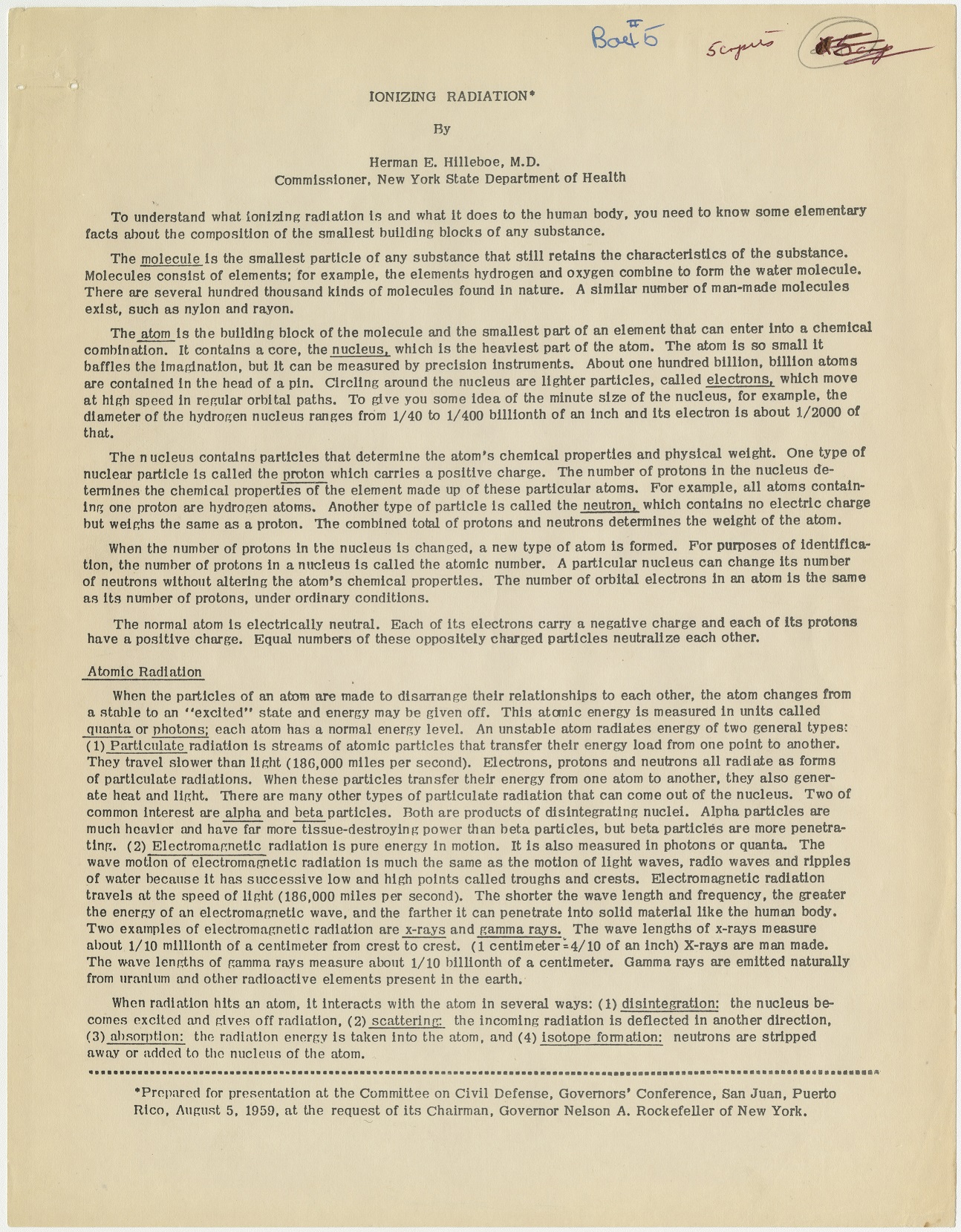
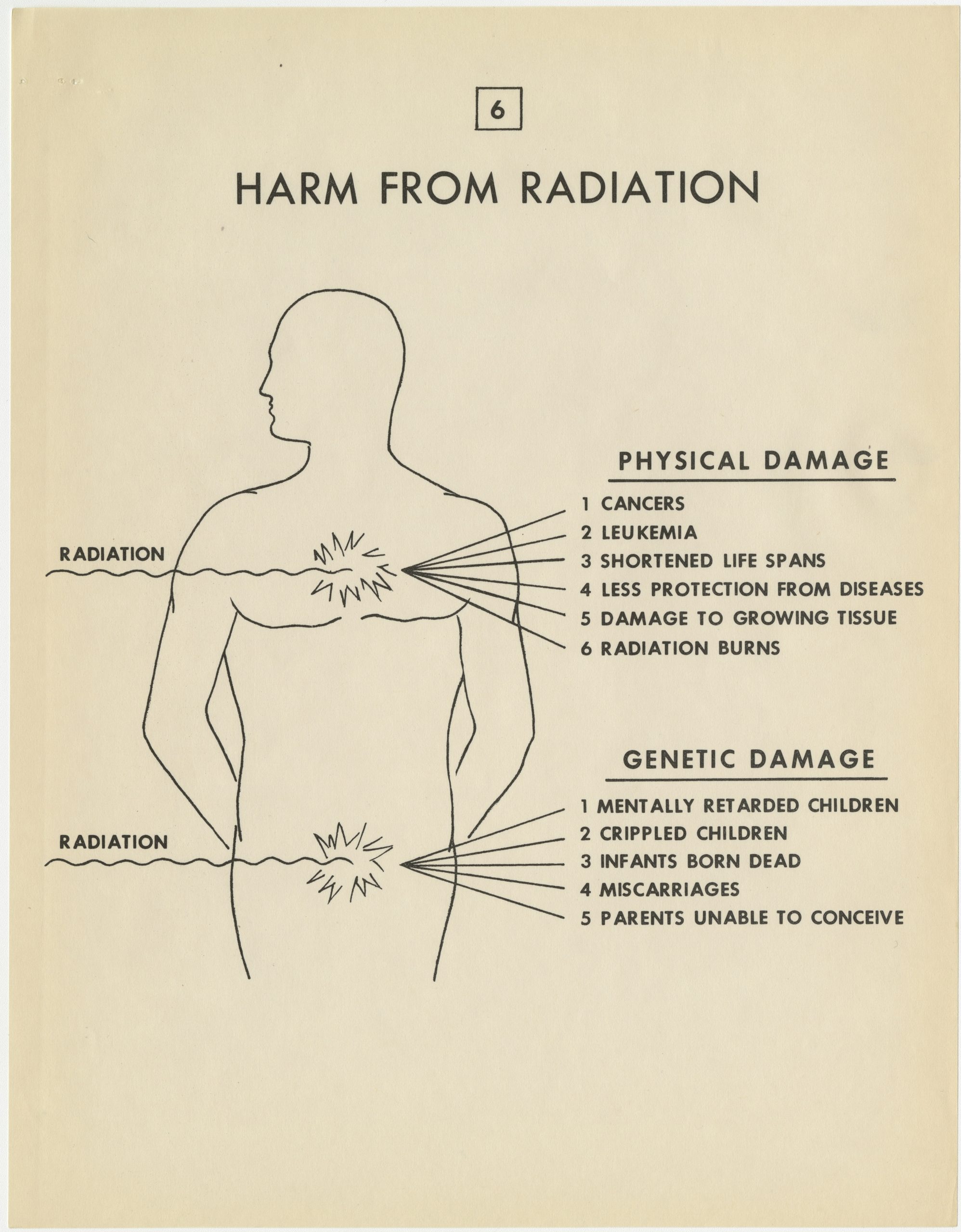
Hilleboe, Herman E. (Herman Ertesvaag), 1906-1974
Cover page & Illustration 6: “Harm from radiation”
“Ionizing radiation” prepared for presentation at the Committee on Civil Defense, Governors’ Conference, San Juan, Puerto Rico
August 5, 1959
Herman E. Hilleboe papers
Division of Environmental Health Sciences, School of Public Health
By 1960, programs of study included: public health, administrative medicine, administrative and community psychiatry, biostatistics, nutrition sciences, tropical medicine, and continuing education. Then in another switch of terminology, “environmental health” replaced “sanitary science” as a course of study in the 1965/66 announcement.
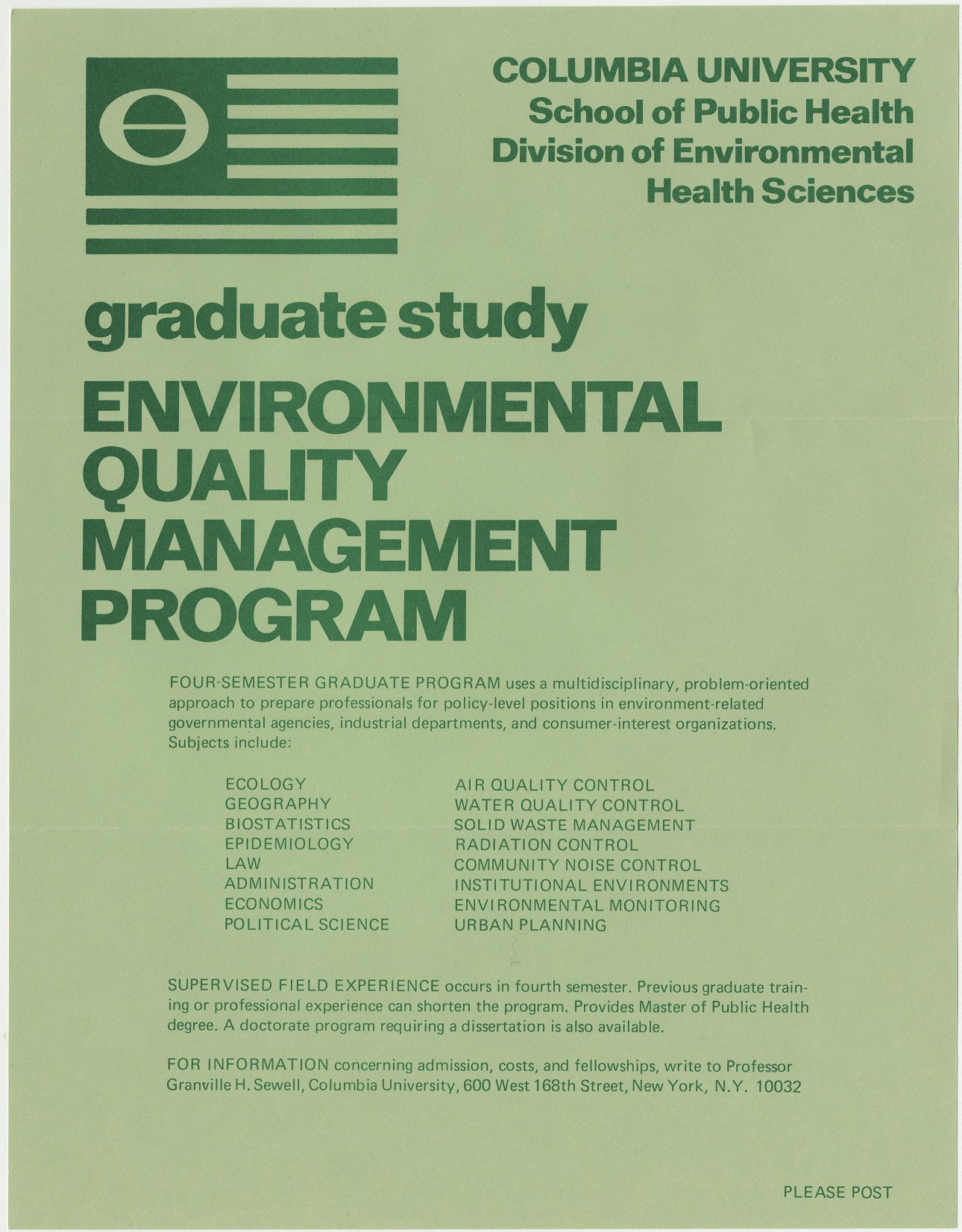
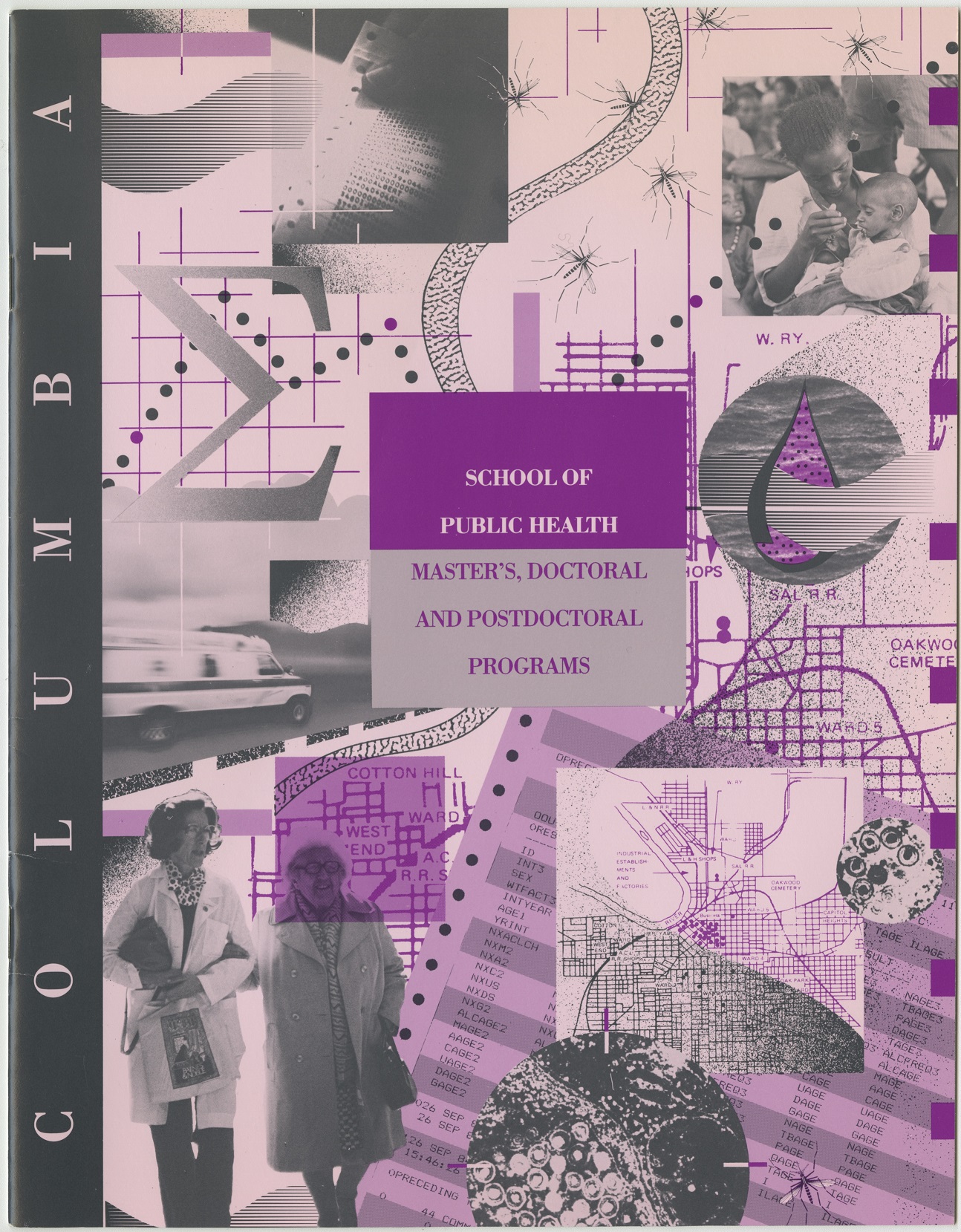
School of Public Health programs
School of Public Health Collection
Up until 1970, the School of Public Health had both the divisions of Environmental Health and Occupational Medicine but due to the interdisciplinary and inter-divisional nature of the two, they combined as the Division of Environmental Health and Occupational Medicine with courses labeled “Environmental Health Sciences.”
These divisions eventually broke off leaving the “Environmental Health Sciences” program of study reflected in the department’s name. The Mailman School of Public Health website describes the current degree program.