Archives and Special Collections collects the records of the Columbia University Medical Center campus and materials documenting the history of the health sciences. As part of our mission, the Archives also collects personal papers from alumni, former faculty and staff to document the history of CUMC, affiliated institutions, and the campus. Fortunately, our repository received the gift of the Alan Berkman papers in 2013, which are now open for research.
A quick bio: An alumnus of the College of Physicians and Surgeons (MD 1971), Alan Berkman was involved in militant revolutionary groups during the 1970s-1980s, such as the Weather Underground, May 19th Communist Organization, and the Black Liberation Army. He was involved in armed robberies and lived as a fugitive with other well-known members of these groups. Berkman was incarcerated and served his time, but once released from prison, returned to his career as a clinician, treating underserved patients, particularly the homeless, mentally ill, parolee populations, and those living with HIV/AIDS. He was diagnosed with cancer while incarcerated and died at the age of 63 in 2009. You can read a more detailed biography in the finding aid for his papers.
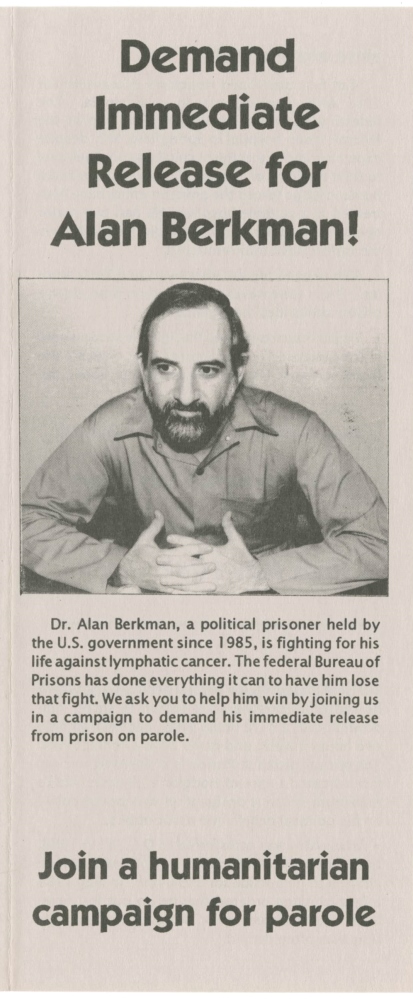
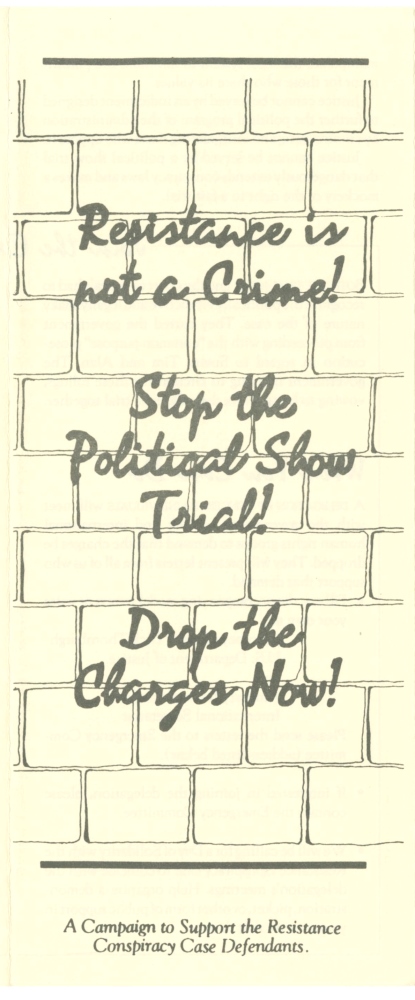
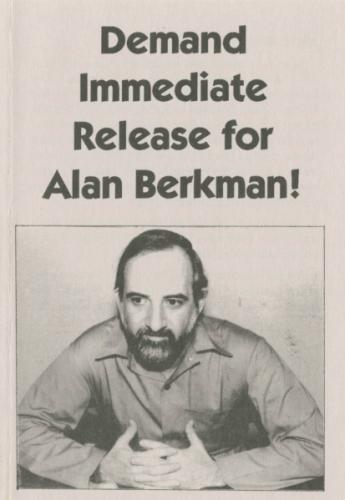
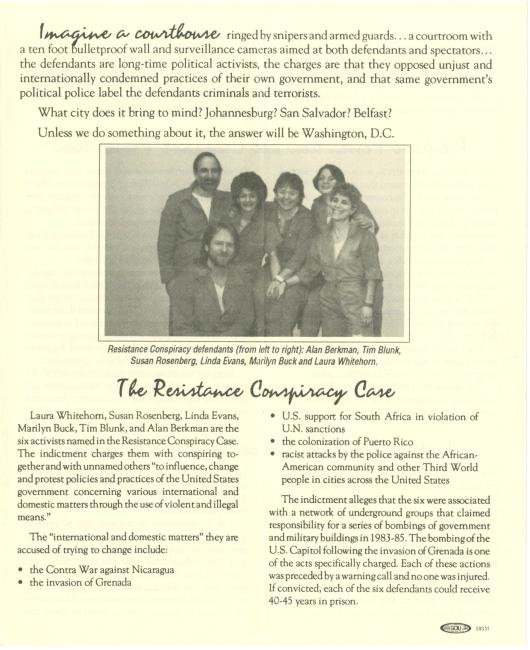
Pamphlets distributed by the Emergency
Committee for Political Prisoners Rights, 1989-1990
Needless to say, his life and papers will draw interest and controversy for many years to come.
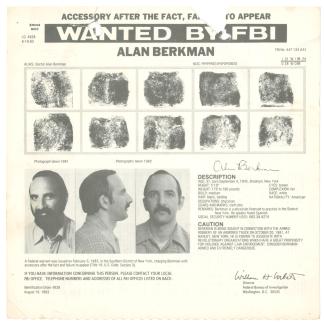
A Columbia University trained physician, Alan Berkman’s life became newsworthy after treating a gunshot wound of a perpetrator involved in the armed robbery of a Brinks armored car near Nyack, New York on October 20, 1981--organized by members of the May 19th Communist Organization (M19CO) and the Black Liberation Army. They reportedly stole $1.6 million and two police officers and a guard were killed. The M19CO was later responsible for a number of bombings, most notably the U.S. Senate in 1983. After his arrest in 1982, Berkman refused to talk to authorities, skipped bail, and thus began his life as a fugitive.
What’s in the Berkman Papers?
Personal “papers”—the letters, notes, writings, manuscripts, and collected items acquired over a lifetime--are a valuable resource to researchers, but should be approached with the understanding that individuals often collect and create material in an inconsistent manner. People lead complicated lives, and so personal “papers” may not be saved and disposed in a logical way. With that in mind, researchers can piece together correspondence from other personal papers or from the archives of other institutions to fill in the cracks.
The bulk of the Berkman papers contains material stemming from his legal issues, including correspondence between him and legal counsel, between legal counsel and government officials, and court and trial documents. Of interest are Berkman and his legal counsel’s records used by them in Berkman’s “Conspiracy Resistance” trial in 1987. Although these same documents might be obtained from the public record, those from his collection have the annotations and other markings associated with his defense. Documents in this collection give an account of the case brought against Berkman and other defendants.
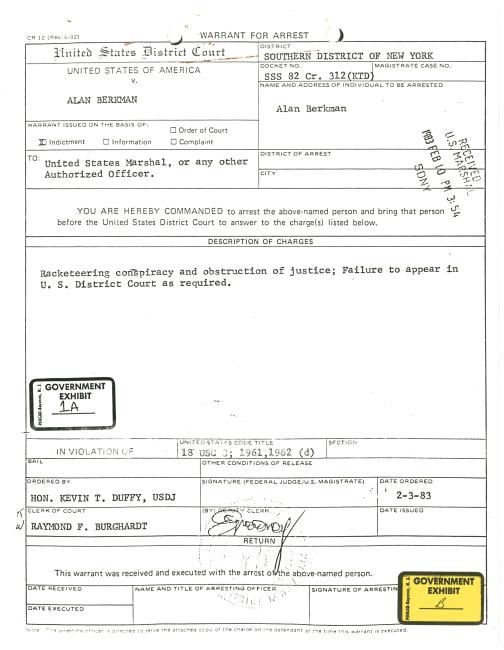
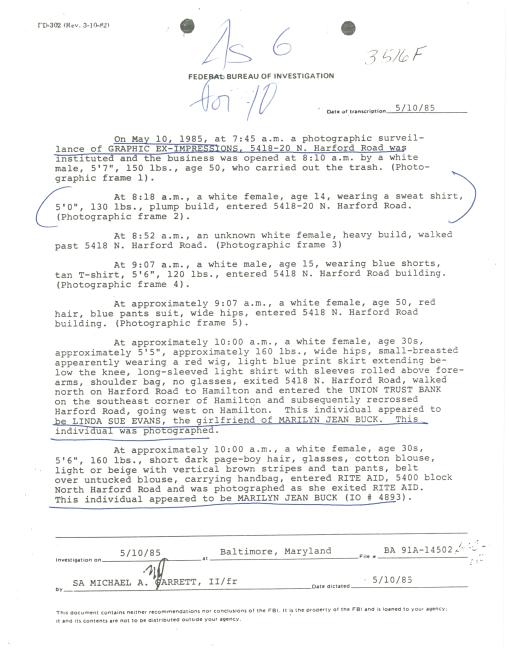
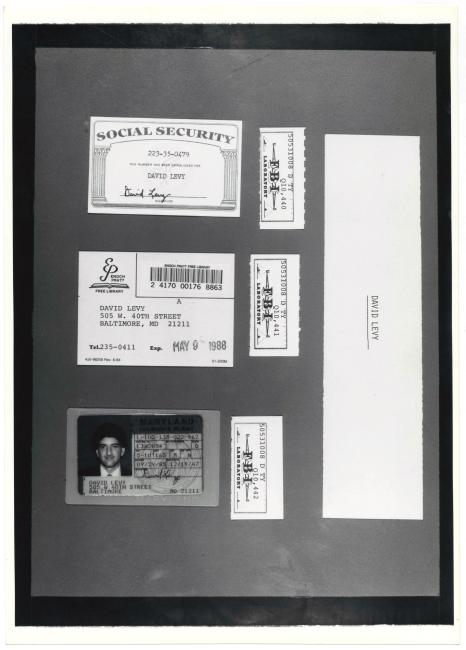
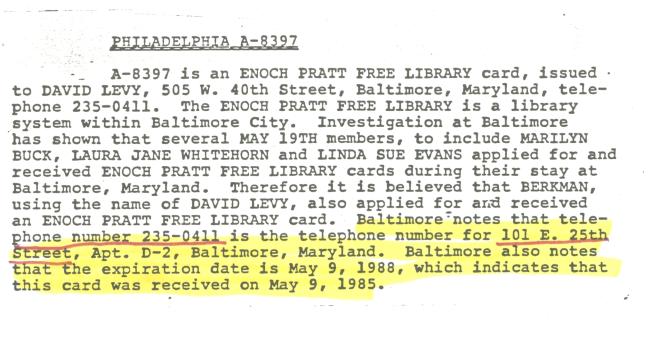
The collection also contains copies of trial and court documents originating from the FBI investigation and submitted as evidence.
After skipping bail and living underground, Berkman continued to participate in activities to further the cause of these political organizations. Under surveillance, he and an accomplice, Elizabeth Ann Duke, were both arrested on May 23, 1985 while driving outside of Doylestown, Pennsylvania. At the time of their arrest, they were in the possession of weapons and a key traced to a garage containing 100 pounds of dynamite.
After his conviction and imprisonment, Berkman was diagnosed with cancer, adding additional urgency to his parole bid. Friends and family advocated for the release of Berkman and the other Resistance Conspiracy defendants on the grounds that they were political, not criminal prisoners. Berkman’s papers contain pamphlets and other material documenting these letter-writing campaigns as well as his friendships with other “political prisoners” and revolutionaries, such as Mumia Abu-Jamal and William Morales.
Apart from his court case records, the papers contain material that helps paint a picture of the person and his interior life. Berkman described his experience in prison and that of fellow inmates in his diaries and letters to friends and family. Due to his personal experience, he advocated for improved prison healthcare and other prisoner rights. He wrote poetry and began work on a memoir. His speeches and drafts are also found in the collection.
Alan Berkman was able to return to medicine and continue his life-long work in public health. He eventually returned to Columbia University as a research fellow and Assistant Professor of Clinical Epidemiology and Clinical Sociomedical Sciences. Most notably, he founded Health Global Access Project (GAP), an AIDS patient advocacy group that helped to reduce the cost of AIDS medications internationally. Unfortunately, the papers do not contain much documentation of this phase of Berkman’s career.
His papers will be an invaluable resource for those studying Berkman’s legacy and that of the “Resistance Conspiracy Six,” prisoner rights, the history of HIV/AIDS, and the radical, militant political organizations and the social movements of the last half of the 20th century.
N.B.: Elizabeth Ann Duke (arrested along with Alan Berkman in 1985) skipped bail, so did not stand trial in the “Resistance Conspiracy” case. She is still at large.